Thursday, September 21, 2017

WACOSA Artists Work Hand-In-Hand With Local Painter To Create New Mural

You can’t miss it.

A bright mural, a mosaic full of color, now hangs permanently in WACOSA’s North Program area. The new artwork was made possible, in part, by award-winning local artist Dan Mondloch, as a WACOSA artist in residence through a Central Minnesota Arts Board grant.


The pieces were created by WACOSA artists, who worked with Dan to create individual acrylic paintings, each week focusing on a different color scheme, art tools and textures, with the end mural in mind.


Dan, a third-generation watercolor painter of landscapes, sorted the paintings by color, created panels out of Masonite and cedar, and went to work on his vision by cutting and pasting the paintings to create the final piece.

The Central Minnesota Arts Board grant, with a goal to engage students and enable learning in the arts, works in tandem with WACOSA’s mission – to enrich the lives of adults with disabilities.

Over nine weeks, Dan formed a close bond with the WACOSA artists.

“I looked forward to coming each week and missed the artists when I left,” he said. “And I think the artists felt the same way. I really enjoyed our time together.”

The beauty of the artwork makes that evident. “Artists’ Point – Grand Marais” and “Kraemer Lake – Wildwood County Park,” will be on permanent display in WACOSA’s North Program areas.

“I'm so proud of this piece,” Dan said of the project on his professional Facebook page. “And I didn't paint a single brush stroke on it.”

This activity is made possible in part, by a grant from the Central MN Arts Board with funds appropriated by the Minnesota State Legislature from its general fund.

Thursday, July 27, 2017

The Importance of a Balanced Work Life

Not only do we like to keep you up-to-date with the happenings at WACOSA, we also like to explain the values and goals that WACOSA keeps and strives to achieve. This month, Executive Director Steven Howard writes about his experience over the last nine years at WACOSA and the importance of balancing your work life.

At WACOSA, we daily commit ourselves to helping those we serve overcome employment barriers. WACOSA’s name actually includes the tagline, “Works”, below it. Our mission “to provide individuals with disabilities the opportunity to work and live in their community” places work first, signifying the importance of pursuing work that is meaningful, fulfilling and pays a wage in proportion to ability and productivity.

The focus on hard work and perseverance is taught to many of us from an early age and is often passed down from generation to generation. The recent initiatives by our state and federal governments – including Employment First, the Workforce Innovation and Opportunity Act (WIOA), and changes in Home and Community Based Services (HCBS) spending and discussions of elimination of the special (sub) minimum wage – all have, at their heart, a focus on competitive, integrated employment as the first, best option for those we serve. This philosophy is developed in the American “work ethic” that emphasizes work satisfaction and the value of all citizens participating in their communities to express their unique abilities for the betterment of all.

This intense focus on work is often viewed as a priority for all Americans and strongly influences where we live and spend the majority of our lives. Former baseball player, Sam Ewing, once remarked, “Hard work spotlights the character of people; some turn up their sleeves, some turn up their noses, some don’t turn up at all”.
Work.JPGWhile it may not be politically correct to say these days, I sometimes wonder if our focus on work isn’t too out of proportion. When helping individuals prepare for and/or locate work, we emphasize work outcomes, pay, benefits, hours, essential functions, status and maintaining appropriate work relationships. Rarely, either locally or in my travels nationally, have I seen any significant focus placed on constructing a balanced work life that considers the importance of having fun where we work. It is important to remember that, for many Americans, a work environment where having fun is important may be a deciding factor in whether or not a job placement is an appropriate fit.

While I recognize that many of us derive satisfaction and enjoyment from our jobs, having fun in our day-to-day duties likely means more than just feeling good about the outcomes we produce. A light-hearted, fun environment that is focused on comradery and free from micro management and intense scrutiny can make the day pass faster and keep our attitudes and morale stronger. Such an environment fosters genuine staff and client team building, encourages natural supports and improves productivity and efficiency.

One question I am almost always asked when I interview for a new leadership position is about my style of leadership. In my early years as a leader, I could not have imagined emphasizing the critical role “fun” plays in the ultimate success of any operation and the durable bond it creates as a platform to attack future challenges. Having observed team dynamics at WACOSA and other organizations over the past 32 years, I am convinced more than ever of the indispensable nature of having fun to promote a balanced work life. Fortunately, the staff and clients throughout my career have tended to agree with my views.

In the past 3 decades, staff and clients of organizations in which I have worked have shown their love in many ways. They have wrapped my entire office in tin foil, flipped my office upside down, left dummies in my chair on Halloween and are never at a loss to give me a good ribbing when I’m out on the work floor.

A few years ago, I dressed as a pirate at the request of the WACOSA staff and clients, to promote United Way giving. When I stepped onto the work floor to greet WACOSA clients and staff, I shouted out, “Hello WACOSA”, in my best pirate voice. One client yelled back, “Screw you”, followed by a chorus of laughing by both WACOSA staff and clients for the now famous client who had the guts to say to WACOSA’s Executive Director what everyone else often wished they could say. I chuckled to myself and walked away thinking, “Now that was really funny”.

Tuesday, May 9, 2017

Collateral Damage: A Message from our Executive Director

A man sits in his wheelchair at the front door of his residence, jacket in hand, waiting for the bus to come to take him to his center-based work program. The bus will not be coming today. It remains unclear when, or if, the bus will come again. The man has significant difficulty with verbal communication and comprehension and does not understand that the Day Training and Habilitation Program, where he works daily, is closed for the foreseeable future due to issues beyond his control. He won’t be earning money today and it remains unclear when, or if, he will be earning money in the future.
Screen Shot 2017-05-02 at 12.33.10 PM.png
This scenario, though frustratingly sad, is very real, especially for my brother, the man to whom I am referring. While my brother and others like him are now back to work, the future undoubtedly represents significant change and uncertainty for individuals like Dan who often cannot tolerate and do not appreciate significant change in their lives. The scenario I mention caused Dan’s behavioral episodes to spike dramatically during this time, reminding us of the collateral damage that can be inadvertently accomplished if we fail to consider all consequences of the initiatives we pursue and the corresponding worlds that we change.


The Potential Consequences of Eliminating FLSA Section 14(c)

Advocates for closing center-based services and eliminating Section 14(c) of the Fair Labor and Standards Act (allowing payment of less than minimum wage) believe people like Dan should pursue competitive employment. Little thought (and even less comment) is given regarding what will happen to individuals needing hand-over-hand assistance to perform paid work or those who may only be able to complete a few units of work for an entire day of effort. Without the special minimum wage work that Section 14(c) currently allows, receiving a paycheck may soon be out of reach for many individuals with the most significant disabilities in the months and years that follow.

The aforementioned scenario is a very real possibility for many of the 15,000 plus individuals in Minnesota, like my brother and those served here at WACOSA, who are currently paid less than the minimum wage. The compelling cry to discontinue Section 14(c) and reduce center-based work is expressed loudly and clearly by those with a voice and a platform. But many individuals with the most significant cognitive and physical challenges cannot offer a rebuttal. Many of these individuals are often not as eloquent or articulate as the spokespeople we often see in front of microphones today. Are those with greater barriers to employment less deserving of an opportunity to earn a paycheck than those who can appear before lawmakers to make their case?

It’s ironic to me that the espoused Employment First Policy that “raises the expectations that all working-age Minnesotans with disabilities can work, want to work and can achieve competitive integrated employment,” threatens the stability of an already tenuous Minnesota workforce that reports an unemployment rate of 4%, as of September, 2016.


Finding Support in the Fair Labor and Standards Act

In an environment where qualified workers are difficult (if not impossible) to find, many seek to dismantle successful and critical employment relationships that often take years to foster. We at WACOSA work daily with business customers that appreciate the work we do as essential to the ongoing efficient operation and longevity of their business. Our services compete rigorously with other vendors. We do not receive concessions for quality, timeliness or price because of our mission or non-profit status.

Screen Shot 2017-05-02 at 12.37.03 PM.png

We, and others like WACOSA across our state and country, provide a source of high-quality, consistent, and dedicated labor for 6 or more hours a day that allows anyone we serve – regardless of physical or cognitive ability – to work within the boundaries and characteristics that define them personally as a member of the United States workforce. Section 14(c) of the Fair Labor and Standards Act, when applied legally and correctly, remains an important reasonable accommodation that, if scrapped, has no viable alternative for persons who cannot or choose not to participate in competitive employment.

In a meeting I attended recently, I was challenged regarding some of the beliefs I hold. The individual addressing my perspectives, citing many of the current/pending state and federal legislative initiatives, remarked;
“Even though some individuals may not be allowed to earn less than the minimum wage and may not be capable of working at a competitive level, they could still be ‘involved’ with work. In fact, these individuals would still be able to take part in program activities exploring competitive work, participating in tours, taking part in work-related experiences and doing skill building.”
When I asked a WACOSA client named Dave, who is one of WACOSA’s most dedicated and committed workers who earns less than the minimum wage to comment on this perspective, he just frowned and in a quiet voice responded, “That idea sucks”. I thought to myself as I walked away, enough said.


Steve Howard

WACOSA Executive Director

Friday, March 17, 2017

Enjoy Your Job and Make A Difference at WACOSA

Are you looking for a meaningful job that will provide a positive impact on the lives of others? Does working in a fun team environment with health insurance options interest you? Consider a rewarding career with WACOSA!


Below, you’ll find a testimonial by Ann Kennedy, who is the Sales, Marketing and Communications Manager at WACOSA, and you’ll learn how she finds fulfillment in her job:


One of the reasons I started working at WACOSA was, simply, I needed a job. Even more than that, though, I was ready for a change. I had spent my life working in for-profit businesses. I had great jobs and not-so-great jobs. The reality is that I didn’t have any passion for my work.


20121011_0284.jpg
Ann and Rachel


In 2008 I started at WACOSA. I knew it was a nonprofit that helped individuals with disabilities to work and live in their community. I didn’t know much more than that. About a week into my employment everything changed. At WACOSA, the shift change is a busy time. I was looking out the window watching the people we serve during the shift change when it dawned on me. I was responsible for helping all these people with disabilities break down barriers and find meaningful employment. With that employment comes purpose, pride, and a greater sense of self. It was that very moment I realized what I had was much more than a job. I had found a truly meaningful career.


20121011_0367.jpg
Lance and Ann


Now, when I go home at the end of the day, I take joy in knowing I am serving the greater needs of our community. I am helping really good people and I am working with a dedicated team of professionals. You see, WACOSA changed the definition of what rewarding work is for me. Now I make a difference in the lives of others. The biggest surprise, however, is how the people we serve made a difference in me.


If you want to make a difference, please contact us to learn more about our current employment opportunities.

Monday, January 23, 2017

Volunteer Opportunities at WACOSA

Volunteering at WACOSA has many benefits. Your volunteer efforts are felt by our staff, our clients, and, or course, by you! If you would like to get more involved in volunteer work this year, WACOSA has plenty of opportunities available. Read more about some of these roles below:


Activities Assistant
_MG_6556.jpgAs an Activities Assistant for WACOSA, you will assist staff members with scheduled activities on the weekly calendar. You would help set up for, clean up after, and assist the clients in these weekly activities. You can also add any expertise you might have by teaching the client information that you are passionate about.


Shifts for an Activities Assistant are available Monday through Friday between 8:45 AM–4 PM at all WACOSA sites. We prefer if you commit to a minimum of 2 hours per month.


Mender/Sewer/Class Instruction
Our clients are always eager to learn a new skill. If you are proficient in sewing, volunteer your time to teach others. You can also utilize your skills to create new and repair existing clothing, weighted vests, weighted blankets and other alteration requests in the comfort of your home. Time commitment can range from approximately four to twelve hours per month.


Environmental Projects Assistant
Through environmental projects, we work to develop our clients’ ability to complete paid work, but also to interact with non-paid projects and activities. In this role, you will be working to enhance the quality of the environment for clients. This can include landscaping, gardening, patio design, care, and other duties. You may also be responsible for maintenance tasks on vehicles and accessible equipment for staff and clients alike. If you like working with your hands, this is the volunteer opportunity for you!


To volunteer for these tasks, you must have experience with basic shop procedures, yard equipment, and tools. You must also have the ability to lift and carry 20 pounds, handle intermittent bending, twisting and reaching, and stand for up to four hours while performing tasks. (A driver's license and health card are required to drive WACOSA vehicles but is not necessary to fulfill this position.) Shifts for the Environmental Projects Assistant are available Monday through Friday between 6 AM and 2 PM at 320 Sundial Drive, Waite Park.


10.07.14 (2).jpg
Curriculum Assistant
Would you like to help others to develop basic computer skills? How about learn more about digital cameras and photography? Do you enjoy leading classes and teaching new skills to others? Volunteer as a Curriculum Assistant! Use your abilities to help others learn basic computer skills, such as accessing the internet, cutting and pasting images, saving documents into proper folders, and basic typing.You can also help with basic photography skills, such as taking photographs, saving photographs on the computer, and laminating and printing photographs.


Curriculum Assistants also aide in preparing materials needed for other client classes, such as sewing, gardening, musical therapy, creative movements, etc. Shifts are available Monday through Friday between 8:30 AM–4 PM, at 320 Sundial Drive, Waite Park.


Musical Therapy Provider
Anyone with a background (or love of) music will tell you that music can provide therapy. If you have musical skills, volunteer to spread your talent by providing musical entertainment to clients.In the past, our clients have enjoyed acoustic guitar, accordion, piano and electric organ sessions. (We have an electric organ at the Waite Park location for your use.)


Shifts last 1-2 hours and are available Monday through Friday between 8:45 AM - 4 PM at all WACOSA sites. We prefer that our Musical Therapy Providers commit to one hour or more each month.


Retail Assistant at ThriftWorks!
IMG_2260.JPG
As a Retail Assistant, you will volunteer your time to assist staff members with sorting and pricing merchandise, store stocking, customer service, donation drop-off and maintaining a pleasant environment for customers. A minimum of 2-hour scheduled shift per week is required at our ThriftWorks! store. You can schedule your volunteer opportunity here.


Wellness Assistant
As a wellness Assistant, use your skills to help our staff teach our clients healthy eating skills and workouts to be adapted for a variety of different abilities and needs. Shifts are available Monday through Friday at various times, depending on class schedules.


Not only are there plenty of opportunities to volunteer, but there are multiple ways to apply! To contact WACOSA’s volunteer services, you can fill out an application and email it to Andrea Harrell at aharrell@wacosa.org or fax it to 320-259-4679. You can even mail it to us at PO Box 757, Waite Park, MN 56387.


Don’t have the time to dedicate to volunteer work? There are plenty of other ways that you can help give back. Learn more on our Ways to Give page.

We hope to hear from you soon!

Wednesday, August 31, 2016

The Heart of Positive Change: Staffing Your Business with WACOSA


2015 Jennifer Weber.jpg
WACOSA is a non-profit organization that was initially started by parents to support their children. Today, WACOSA serves over 575 adults with disabilities in central MN. Our mission is to provide individuals with disabilities the opportunity to work and live in their community.
Since we began our work, we have noticed that some businesses can be reluctant to hire people with disabilities. Some may be worried about changes and liabilities that they think will come with hiring a person with disabilities. These worries are usually rooted in inexperience—hiring a person with disabilities is not unlike hiring any new employee. There will be an adjustment period, but it doesn’t last long.  


Some common concerns businesses have about hiring employees with disabilities (and reasons why hiring them is beneficial) are listed below:
Concern: My insurance rates will go up.
Many businesses have concerns that if they hire someone with a disability their insurance costs will go up. A survey of human resource managers by Cornell University has proven that companies’ health, life, and disability insurance costs actually rarely go up as a result of hiring people with disabilities.


Concern: How will hiring an employee with disabilities affect other employees?
Hiring a new employee and wondering if they will fit in or get along with the others is always a concern. It might be uncomfortable at first depending upon your current workers’ experience in socializing with people with disabilities, but it usually doesn’t last very long.  It actually has been reported that current employees work harder and are more productive after having people with disabilities in their work environment. There really is no difference in how you would communicate with a person with a disability. The reality is that the person with a disability wants to have the same conversations and be treated the same as every other employee.


Concern: What if it doesn’t work out?
It is never easy to terminate an employee, especially if the employee has a disability. If a person with a disability starts to experience problems down the road, an employer shouldn’t fear termination. If the employee isn’t able to do the work or make corrections to their performance, it is within your rights to terminate the employee, just as you would with anyone else.


Conclusion: Be the heart of positive change
Companies can make a real difference in the lives of others simply by giving them the chance to work. Be the leader who sincerely makes an effort to help a person with a disability. By doing so, you are not only assisting them in creating a better life, but you are also instigating change.


20120815_2768.JPG


If you are interested in making a positive change in your workforce, WACOSA offers a great program called Staffing Your Business. We work with our clients and your business to find the best match for your job opening. We are committed to the highest standards in job training, coaching, and support for the individuals we train, providing a workforce you can truly rely on.  Take theses concerns and tips into consideration during your next hiring process and be the heart of positive change.


Tuesday, July 12, 2016

Wacosa Seniors Host Aunt Bea’s Tea Party

Aunt Bea's Tea Party 05-13-2016 (1).jpg
Providing the seniors we serve with the ability to connect with other people their age to help them remain active in the community is exactly what WACOSA’s Senior Service program is all about. Our seniors have the opportunity to volunteer through the RSVP program, participate in classes and crafts, and take day trips to different events in the area.
Aunt Bea's Tea Party 05-13-2016 (2).jpg
In May, the Whitney Senior Center in St. Cloud was turned into Mayberry, North Carolina. Seniors had the opportunity to “visit” Mayberry - the home of the Andy Griffith show.
The classic American sitcom, first televised between 1960-1968, portrays a widowed sheriff in a small community that has complications in life when an incapable but well-meaning deputy, spinster aunt and housekeeper, and a young son come into his life. Even though the show was shot in the 1960’s it captured the reminiscing Americana feeling of the 1930’s.

Aunt Bea's Tea Party 05-13-2016 (6).jpg

For a full week, our seniors spent time doing activities centered around the “Andy Griffith Show” and Mayberry. On the last day of their “visit”, they had a tea party in honor of Aunt Bea. This “visit” had the seniors reminiscing of old times and brought back many good memories for them.
Aunt Bea's Tea Party 05-13-2016 (14).jpg

One of our goals for our Senior Service program is to help community seniors remain active. This Tea Party was a great opportunity for our seniors to enjoy some reminiscing and be active with their peers.

If you would like to volunteer with our organization, visit the Ways to Help page of our website.

Tuesday, July 5, 2016

Exercising With A Disability

Physical exercise is essential for staying healthy, fit and strong. This is especially the case as we age and when living with a disability. Adults with disabilities are three times as likely to suffer from heart disease, diabetes, and cancer as adults without disabilities. Aerobic and muscle-strengthening activities can reduce the impact or even prevent these chronic diseases and promote a healthier, more mobile lifestyle.

Aerobic Activities
Aerobic activity is something every adult should do on a regular basis. Aerobic exercise can increase the efficiency of the respiration system, improve circulation and cardiovascular efficiency, improve motor coordination, and decrease the risk of developing artery disease, cancer, and diabetes. Aerobic activity has the added benefits of decreasing anxiety and stress and improving emotional health.

water-933172_640.jpg

Doctors recommend either 150 minutes of moderate-intensity aerobic physical activity a week or 75 minutes of vigorous-intensity aerobic physical activity. Alternatively, you can do a mix of moderate and vigorous aerobic intensity.

Moderate-intensity aerobic activity can include brisk walking, hiking, wheeling independently in a wheelchair, ballroom dancing, and aquatic therapy.
basketball-102377_640.jpg
Vigorous activity can include jogging, wheelchair basketball, wheelchair volleyball, or wheelchair tennis. Vigorous-intensity activities to get you outside can include cross-country or downhill skiing, water aerobics, and horseback riding.

Muscle-Strengthening Activities
Gaining muscular strength isn’t just for gym rats and bodybuilders. Having muscular strength means having higher muscle mass and higher amounts of energy that can make your body stronger and healthier. Muscular strength also benefits your overall health and can aid in the prevention of cardiovascular diseases, hypertension, hyperlipidemia, and diabetes.

Doctors recommend working on muscle strengthening exercises that target your major muscle groups at least twice a week.

Muscle-strengthening exercises include working with resistance bands or engaging in adapted yoga classes. Check out this comprehensive list of seated-position exercises for strength training with a disability from Sparkpeople.com.

Physical activity is important for every adult to engage in, and it’s essential to maintaining a healthy lifestyle. Consult with a doctor for recommendations on physical activities. Doctors can help recommend activities based on ability, desired intensity levels, frequency, and which activities you enjoy and want to explore. Most importantly, have fun with it!

Monday, May 16, 2016

5 Services Your Donations Support at WACOSA

5 Services.jpg

Your donations to WACOSA help support and make a difference in the lives of adults with disabilities, but have you ever wondered how? Your donations are greatly appreciated and make it possible for us to support our WACOSA clients with various services. These are just a few:

1. Activity Books
A $50 donation will provide one set of assorted activity books. Included in the set is four books, each with a different theme of puzzles, games, and trivia. Instead of having information read to them, our clients love to learn with activities like crossword puzzles and trivia questions.

2. Chairs
A $90 donation provides one chair for the WACOSA Senior Program at the Whitney Senior Center in St. Cloud. These chairs are made with sturdy metal and vinyl upholstery. Plus, they are very comfortable and easy to clean. These chairs are great for our seniors when they need to sit or stand.

3. Speaker System Upgrade
A $300 donation will help us to get one iPod to update the speaker system at our Waite Park site. Right now, we are in need of an iPod for each of the three program areas.

4. Refrigerator
A $500 donation will supply us with one under the counter refrigerator unit. This will help to improve meal preparation. Along with this, it will help improve our clients medication administration.

5. Washing Machine or Dryer
A $1,000 donation allows us to purchase one commercial grade washing machine or dryer for our Sauk Centre site. This is used to wash and dry materials used by the Can Do! Cleaning Crews. Since the crews are cleaning at various local businesses, more than 550 towels and 25 mop heads are washed every day.

Through your generous donations, you make WACOSA’s mission possible - to provide individuals with disabilities the opportunity to work and live in their community. We are in need of multiples of almost every items. To learn more about how you can help, visit our donation page.

Tuesday, January 19, 2016

Spotlight on Sauk Centre

Providing individuals with disabilities the opportunity to work and live in their community is exactly what WACOSA’s mission is all about. WACOSA has two locations - one in Waite Park and one in Sauk Centre. Our Sauk Centre location provides many services to the community, including contract packaging and assembly work, “Can-do” Crews, and business staffing.

20120815_2748.JPG

The first Business Solution offered at WACOSA’s Sauk Centre location is contract packaging and assembly work. Our sales and production staff strive to have a complete understanding of your project, whatever you needs happen to be. Some services include inventory control, pre-operational checklists and training, re-work, and quality checking. Outsourcing to WACOSA can benefit your company in many ways; cutting your costs, boosting your revenue, easing labour shortages and much more.
20120815_2811.JPG
Our “Can Do” Crews are another option to help your local businesses. Our crews consist of five to seven people and we offer cleaning services, product tear-down, assembly, packaging, labelling, and quality checking and re-work. With a 97% satisfaction rating, it’s easy to see why our “Can Do” Crews are so popular around the St. Cloud region.

2015 Leah Bruemmer.jpgStaffing your business is another service of WACOSA’s Sauk Centre location. When set to staff your business, we are committed to the highest standards in job training, coaching, and support. We work diligently with each client to get teams trained until they feel comfortable to produce their own work. We also find it important to have follow-ups with our staffing clients to keep in touch and ensure success within their business.

Although Sauk Centre does not have a thrift store, we do still accept donations at the location. Docu-Shred is also only available at the Waite Park Location, but the Waite Park location works with customers at Sauk Centre to shred their documents.

Our vision at WACOSA is that individuals of all abilities are empowered to reach their full potential. Our vision is made possible through the array of services we offer the community. To get updates about WACOSA, like us on Facebook.

Sunday, December 13, 2015

A Man We Should All Look Up To

Kris was born to inspire. His journey began when he was diagnosed with Cerebral Palsy - a condition that brings many unique challenges to the people it touches. Although this disease brings many challenges, Kris refuses to let it stand in his way of making an impact on those around him.  


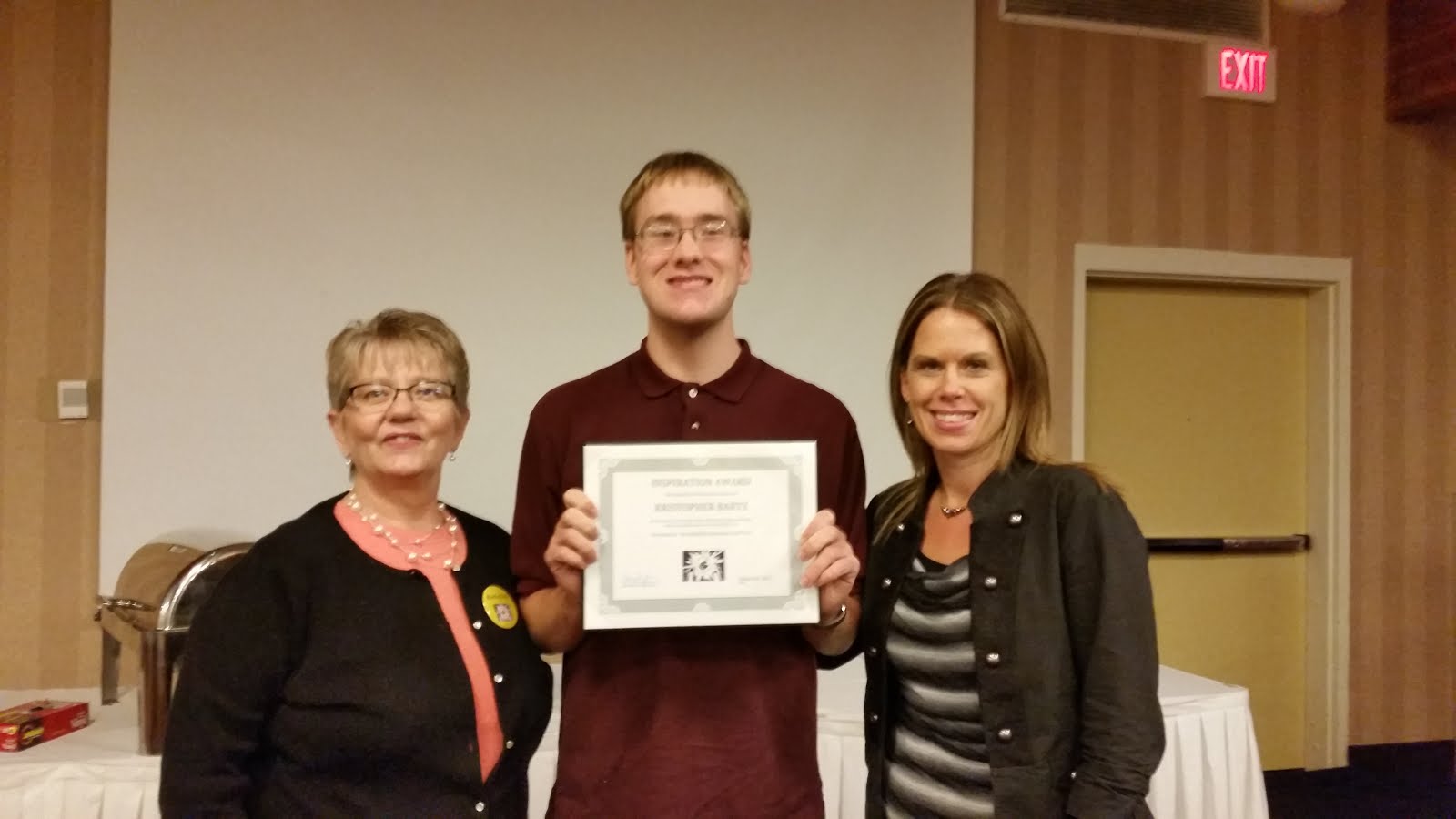
Kris Bartz, a positive, and determined young man, was one of four recipients of the 2015 Inspiration Awards given out by the Disability Awareness Task Force. Nominees are not given this award because they have a disability but because they inspire and give back to the community.

He attended the Occupational Skills program at Brainerd Central Lakes proving that hard work and dedication brings success. During his experience at OSP, Kris discovered his passion of working in a nursing home setting. His sense of humor and loving heart has a positive impact on the elderly.

Kris diligently worked through his CNA training program to help make his dreams become a reality. Although he faced many obstacles along the way, he surpassed some negative beliefs of his capability by receiving his CNA certification. Kris has time and time again proved his drive and passion in caring for others.

Kris was a referral to WACOSA from vocational rehab and we helped him use his many talents to find a job at Sterling Park. He works as a full-time 2nd shift CNA assisting residents with activities, meal times, and getting residents ready for bed.

Kris opens up his heart to whomever he meets. He has a contagious smile that never fails to brighten his patients day. He strives to let people know that they matter, that their lives are important, that he always has time to help and visit with them. He wants to make an impact on those around him, and he does!

But Kris doesn’t stop here - he is involved with Special Olympics competing in bowling and track. He also dedicates his time as a global messenger, speaking out on behalf of those with disabilities.

His generous heart is inspiring to us all. It takes a kind and loving person to receive such a fitting award - Kris is a man we should all look up to!

Monday, November 9, 2015

Preparing for Give to the Max Day 2015

Preparing for Give to the Max Day 2015
 
Minnesotans around the state are gearing themselves for Give to the Max Day in hopes of breaking last year’s record of  $18 million donated to schools and nonprofits throughout the land of 10,000 lakes.


Give to the Max day is extremely important for nonprofits because it strengthens the nonprofit community by making their organizations more well known in the area. Creating relationships with community members helps find supporters that are passionate about the same goals and missions of making the community a better place.


GiveMn is a resource to help connect people with organizations within Minnesota. Every year, GiveMn sets aside one day to fundraise as much as possible for local schools and nonprofits in our community called Give to the Max Day. Fundraising is a major part of Give to the Max Day. Fundraising for your favorite organization can be difficult, but don’t let that stop you- there are tons of simple ways to get involved:
Use the Media
Using media to your advantage helps get the word out to all people in your communities. Contacting news stations, local newspapers, radio talk shows, and social media help spread the world about your passion for fundraising. The more people that know about the event, the more donors you receive.


MORE is More
Focus on getting multiple donors rather than focusing on the amount each individual donor gives. If you spend your time getting people to donate, they will be more interested in the cause with which you are participating rather than just solely asking for a number. Fundraising is all about the way you present it. Grab your audience’s attention making them want to support your mission.


Cite your Source
If you want people to donate to an organization because it means something special to you, tell them why it is important. Explain to potential donors why the organization is important to you and what, in your eyes, makes it special and worth funding. genuine appreciation through the eyes of someone involved will speak much louder than any other selling tactic you can think of.


This year, Give to the Max day is set for November 12, 2015, so grab your best fundraising skills, make a plan,  and let’s do our best to earn some funds for Minnesota Schools and nonprofits! If you have yet to choose a nonprofit, make WACOSA your organization of choice by visiting our Give MN page.